Thursday, April 4, 2013

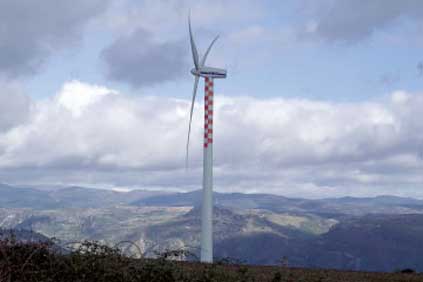
Vestas V80 Wind Turbine Crash


Vestas V80 destroyed by fire in Ontario

This is unbelievable!! In one week two times Vestas wind turbine destroyed. This is really huge disappointment for Vestas side. And nowadays everybody has same question in mind. What is wrong with Vestas wind turbines ?? 

CANADA: An investigation is under way at a 40MW project in Ontario after one of its Vestas V80 1.8MW turbines caught fire.

The fire was at the Kingsbridge project, near Goderich, which was built in 2005. It is owned by utility Capital Power. Images of the incident show the nacelle was completely burnt out.

Vestas V80
In 2011, a 2MW V80 caught fire in high winds at the Ardrossan wind farm in Ayrshire, Scotland. The incident occurred as the northern half of the UK faced winds of up to 165 miles per hour.

Last year Vestas was hit by a number of fires in its turbines. In April, the nacelle of a V112 3MW turbine caught fire in Germany, while in June a V90 in Spain suffered a similar fate.

Vestas
The Spanish fire was caused by an arc flash during servicing, while the German incident was the result of a loose connection in the electrical system.

Last week a Vestas V52 collapsed in high winds at a project in Donegal, Ireland.

Vestas V112-3.0 MW

The V112-3.0 MW is a hard-working, reliable turbine designed for low and medium wind speed sites onshore anywhere around the world. These are the areas that comprise tomorrow’s biggest market for wind power plants. The V112-3.0 MW can generate more power than other turbines in the 3 MW class. It offers an exceptional rotor-to-generator ratio for greater efficiency and delivers unsurpassed reliability, serviceability and availability under all wind and weather conditions – setting a whole new standard for turbine performance and efficiency.

Advanced power electronics conversion
Advanced power electronics conversion ensures stable and scalable output from the turbine. Combined with a flexible operations strategy, advanced power electronics conversion allows you to increase power production by temporarily increasing the power output of the turbine in favorable conditions.

Vestas 3 MW
Built for easy maintenance
The new nacelle design is a good example of innovative technology with decades of experience. The power converter is integrated into the nacelle floor, which provides more working space and makes it easier to service the components. Significantly more floor space is just one of the features that make service and maintenance both faster and easier. The design makes smarter use of space while also setting new standards for ergonomics and safety in the nacelle. Essential tasks can be completed effectively without compromising
safety. There is plenty of room for handing all spare parts, and the main components can be lifted in with ease. On sites with limited accessibility, it can often be a good idea to install nacelle components with the help of Vestas’ innovative tower crane, which does away with the need for expensive mobile cranes.

Load reduced operation
Load reduced operation provides extra security at complex sites, where narrow sectors with extreme gusts and other abnormal wind conditions can occur. Load reduced operation enables the turbine to automatically protect itself against needless wear, which can damage the turbine and shorten the service life of some components.

Main component preheating
The cooling system in the V112-3.0 MW is also used for preheating, which prevents condensation. Primary components such as the generator, the gearbox, the converter and the blade hydraulic system are heated from inside by means of hot water in the cooling systems when the turbine restarts after a production stop in cold climates.

Vestas nacelle
Automatic lubrication
Automatic lubrication of the blade bearings, the yaw system, the main bearing and the generator boosts reliability while reducing the frequency of service calls.

Options

The V112-3.0 MW is available with a number of special options that can be provided at the customer’s requests. These options include:
· Condition monitoring system
· Aviation markings on the blades
· Aviation lights
· Smoke detectors
· Fire extinguishing system in nacelle
· Company logo
· Low temperature operation to –30°C
· Ice detection system

Can be installed almost anywhere in the world
Even though the V112-3.0 MW is a mass-produced wind turbine for low and medium wind speed sites, it complies with all the standard transportation requirements. Even with its 54.6-metre blades, the V112-3.0 MW can be transported to most sites in the world without being subject to special fees and restrictions that can delay or increase the cost of wind power plant construction.

A giant stride in aerodynamics
Vestas is famous for designing and producing some of the world’s lightest and most effective blades – blades that deliver the greatest possible output while causing the least possible loads to the turbine. With the groundbreaking 54.6-metre blades on the V112-3.0 MW, Vestas has taken another giant stride in aerodynamics. Although these blades have the same width as our 44-metre blades, they sweep an area that is 55% greater to deliver considerably higher output. Finally, the blades are designed to be less sensitive to dirt, resulting in better performance at sites affected by salt, insects or other particles in the air.

Vestas
Low sound levels, high productivity
The V112-3.0 MW is a quiet turbine even during power optimised operation, but it is even quieter during low-noise operation. The turbine can be operated in configurable modes that keep within defined decibel ranges, without having a significant effect on productivity. This makes the V112-3.0 MW ideally suited for use anywhere in the world where sound-level limits are in force.

Verified component lifetime
At the Vestas Testing Centre and Technology R&D, engineering experts and technicians use state-of-the-art testing methods to ensure that all components and systems meet our standards for safety, performance and reliability throughout their 20-year service life. These tests push the components beyond their specifications. One method is known as Highly Accelerated Life Testing, where some of the testing is conducted in a HALT
chamber. Extreme fluctuations in temperatures combined with heavy vibrations are just some of the stress tests the components are subjected to here. This enables Vestas to identify and address design flaws long before the turbines reach the market.

Service and maintenance
Vestas has service centres around the globe and we are able to cover your every need, from simple cleaning and planned maintenance to emergency call-outs and on-site inventories customised for your turbines.

Project management for effective plants
The better your turbines fit your wind site, the more profitable your plant will be. That’s why Vestas offers to take on project management from the initial wind measurements to complete installation of the wind power plant. More than 30 years of international experience and local expertise enable us to complete:
· Wind and site studies
· Designing the wind power project
· Selecting wind turbine types
· Installing the wind farm
· Servicing and maintenance throughout the turbine’s service life
· Monitoring and remote troubleshooting.


TECHNICAL data for V112-3.0MW


Power Curve 

Power regulation pitch regulated
with variable speed
Operating data
Rated power 3000 kW
Cut-in wind speed 3 m/s
Rated wind speed 12 m/s
Cut-out wind speed 25 m/s
Wind Class-IEC IIA/IIIA
Max. Altitude 1500 m
Operational temperature range  standard range
(-20°C) to (+40°C)
low temperature option
(-30°C) to (+40°C)
Sound power
7 m/s 100 dB(A)
8 m/s 102.8 dB(A)
10 m/s 106.5 dB(A)
By 95% rated power 106.5 dB(A)
Rotor
Rotor diameter 112 m
Swept area 9,852 m²
Tower
Type  tubular steel power
Hub heights 84-94-119m
Electrical
Frequency 50Hz/60Hz
Converter type full scale converter
Generator type permanent magnet generator
Main dimensions
Blade 
Length 54.6 m
Max chord 4 m
Nacelle 
Height for transport 3.3 m
Height installed 3.9 m
Width 3.9 m
Length 14m
Tower
Max. Section length 32.5 m
Max. Diameter 4.2 m
Hub
Height 3.9 m
Diameter 3.2 m
Max. Weight per unit for transport. 70 metric tonnes


Wednesday, April 3, 2013

How Much Will it Cost Me to Purchase a Wind Turbine?

It costs $1,000-$5,000/per kilowatt to purchase a small wind turbine. However, the wind turbine costs represent only 12%-48% of the total cost of a small wind electric system. You also need to pay for other components of your wind energy system, such as inverters and batteries, as well as sales tax, installation charges and labour.
Keep in mind that the costs of wind power, unlike other sources of electrical power, are almost entirely due to the cost of purchasing and installing the system. Once the turbine has been installed, there is no fuel costs associated with its operation; you will only need to pay for maintenance of your wind turbine.
The cost of the energy produced by small (<10 kW) wind turbines over their lifetimes has been estimated to vary from $0.07/kWh, for a low cost turbine constructed in a windy area, to $0.96/kWh, for a high cost turbine constructed in a low wind area.

Graph  of estimated cost for electricity produced by small wind turbines.
 Estimated cost for electricity produced by small wind turbines (10 kW).
The performance of a wind turbine is normally described by manufacturers using a performance curve of power output versus wind speed, called a power curve .
Graph  example of a power curve for a small wind turbine.
Examples of a power curve for a small wind turbine rated at 10 kW. 
One problem with wind turbine ratings is that there is no industry standard for a consistent wind speed at which to measure the output from wind turbines.
Instead, manufacturers choose which wind speed to use for their wind turbine output ratings. Take, for example, the "Wind-o-matic" and the "Mighty-wind", both rated at 1,000 watts. The Wind-o-matic was rated at 5 m/s winds, while the Mighty-wind was rated at 10 m/s. Because the power in the wind is proportional to the cube of its speed a 1,000-watt turbine rated at 10 m/s will only produce 1/8 of that power at 5 m/s. So, at a wind speed of 5 m/s, the Wind-o-matic will produce 1,000 watts, while the Mighty-wind will only produce 125 watts!
Small wind turbine
Rather than comparing the rated outputs advertised for different turbines, compare the swept area of the turbines. Since the electrical output of a wind generator is largely a function of its swept area, the larger the swept area of a rotor, the more electricity the wind generator produces. Doubling the area on the solar panels that is exposed to the sun can double the electrical energy generated by solar panels. With wind turbines, swept area works much the same way.
If you do not know the swept areas, you can still make reasonable comparisons between wind turbines by comparing the rotor diameters of the turbines. A modest increase in the rotor diameter will lead to significant increases in both the swept area of a turbine and the amount of electricity that the turbine can generate. Please note that the values for power production shown on the following figure are theoretical values, and only intended for illustrative purposes. The actual power production from a wind turbine will be influenced by many other factors, such as: the efficiency that the wind turbine is able to extract energy from the wind; the elevation at which the turbine is located; and other design characteristics of the wind turbine.
Graph of theoretical power production for small wind turbines  when wind speed is 10 m/s.
Theoretical power production for small wind turbines when the wind speed is 10 m/s.
Choosing an Appropriate Wind Turbine Size
To determine the appropriate size of wind turbine to use, review your monthly electricity consumption in kilowatt-hours (kWh). To do this look at your electricity bills for the last year, add the kilowatt-hours you consumed, and divide by 12. Then compare this total to estimates of the power production for different wind turbines, a figure available from a wind turbine dealer.
To get a preliminary estimate of the performance of a particular wind turbine, use the formula below:
AEO = 1.64 D2 V3
Where:
AEO = Annual energy output, kWh/year 
D = rotor diameter, meters 
V = Annual average wind speed, m/s
By making your home or farm more energy efficient and reducing the size of your peak demand electrical loads, you can reduce the size of wind turbine you'll need, thereby decreasing the purchase cost.

Monday, April 1, 2013

Wind Availability and Location Optimization for Wind Turbines

Wind Availability

Whether constructing a wind turbine is economically viable at your home or farm depends most strongly on the quality of your wind resource. Generally, average annual wind speeds of at least 4.0-4.5 m/s (14.4- 16.2 km/h; 9.0-10.2 mph) are needed for a small wind turbine to produce enough electricity to be cost-effective. A very useful resource for evaluating a site for its wind energy potential is a wind resource potential map. 
Wind Map for Eastern Ontario. (a.g.l. = above ground level) (Source: Natural Resources Canada/Zephyr, North Corporation.
Wind Map for Eastern Ontario. (a.g.l. = above ground level) 
It may be useful to check wind speed measurements that have been recorded at a local weather station. It is important to consider that sitting factors at these weather stations, such as nearby trees and buildings, might influence any wind speed measurements. Also, keep in mind that the equipment at these stations is often located close to the ground, and that weather stations located at airports are usually sheltered from the wind.
Wind Map for Southwestern Ontario
Wind Map for Southwestern Ontario. 
This means that wind speed measurements recorded at these stations might under represent the wind potential at your site.
For the most precise evaluation of the wind speed at your site, you need to purchase a wind resource evaluation system. While wind resource evaluation systems can be expensive, if your property is hilly and has unusual terrain features then it might be worth obtaining one.
The most important component of a wind resource evaluation system is an anemometer. Anemometers are typically designed with cups mounted on short arms that are connected to a rotating vertical shaft.
The anemometer rotates in the wind and generates a signal that is proportional to the wind speed. If you do purchase an anemometer, you will also need to purchase something to record the readings made by the anemometer, and a tower or tripod to mount the whole system on.
For as little as $500 you might be able to purchase a wind totalizer, which is a very simple type of wind resource evaluation system where the anemometer is linked to an odometer. The odometer is similar to those found in cars. After a period of time, the number recorded on the odometer, which represents the total "distance" the anemometer has turned, can be divided by the time passed since the odometer was last checked in order to determine the average wind speed over a period of time at a location.
If there is a small wind turbine system in your area, you may be able to obtain useful information from its owners about the annual electrical output of the system and, possibly, wind speed data. Such information could be extremely valuable as an alternative to installing a wind resource evaluation system.
A schematic of a wind turbine:  rotor blade, rotor diameter, swept area of blades,  tower, hub height, ground level.
 Wind turbine schematic. (Modified image from Natural Resources Canada)

Picking the Best Location for a Wind Turbine

Where you choose to build your wind turbine is important. Remember that if nearby houses, tree lines and silos obstruct the full force of the wind from your wind turbine, you will not be able to generate as much power.
Also keep the following in mind:
  • Wind speeds are always higher at the top of a hill, on a shoreline, and in places clear of trees and other structures.
  • Remember that trees grow over the years; wind turbine towers do not.
  • Inform neighbours of your plans to avoid conflict later on.
  • Be courteous. Keep the turbine as far away from neighbours as possible. 250-300 m away is typical.
  • Check with the local government for any other laws and regulations about zoning.
Wind speeds tend to be higher on the top of a ridge or hill, and for that reason it is a good idea to locate wind turbines at hilly locations. Just remember to keep your turbine away from high turbulence. Neighbours must also be taken into consideration when picking a spot to build your turbine. The farther your wind turbine site is from neighbouring houses, the better.
Do not expect your wind turbine to generate the same amount of power all the time. The wind speed at a single location may vary considerably, and this can have a significant impact on the power production from a wind turbine. Even if the wind speed varies by only 10%, the power production from a wind turbine can vary by up to 25%!
Graph showing wind speed distibution by hour of the day.
 Example of wind speed distribution by hour of the day. Values shown are monthly averages of measurements made by anemometers. 


Saturday, March 30, 2013

Wind energy jobs

The Wind Energy Jobs category is the second fastest growing in the green energy generation segment, and include many sub-categories, and a multitude of job types. Examples of wind energy sub-categories include:
  1. Research and development jobs in wind turbine blade and rotor technology; these jobs often require a higher-education degree (bachelor's or master's). Great examples of employers in this category include Vestas and Boulder Windpower
  2. Wind turbine manufacturing jobs. Employers in this category include large wind turbine manufacturers such as Clipper Windpower, and small wind turbine manufacturer XZERES.
  3. Utility-scale wind turbine installation for large wind farms. A great example of employers in this category is Signal Wind Energy
  4. Wind turbine maintenance and repair. Great examples of employers in this category are Horizon Wind Energy and First Wind.
  5. Below are some of the largest and most well-known Wind trade and non-profit associations:
  • The American Wind Energy Association (AWEA) is the leading wind trade association.
  • The Wind Coalition is a non-profit association designed to promote the development of wind energy in the South Central states.
  • Windustry promotes progressive renewable energy solutions and empowers communities to develop and own wind energy as an environmentally sustainable asset.
  • Wind energy jobs
Here are some of our recent stories about wind energy jobs:
American Offshore Wind: 300,000 Green Jobs and $200B Potential.
Venture Capitalists Bet Big on Danotek's Wind Turbine Generator.
Siemens' Wind Unit to Create Green Jobs In Oklahoma.
Wind Power Creates Good American Green Jobs.
Kern County, CA, to Get More Wind Jobs.
A week after GE's Largest Wind Turbine Order, Siemens Gets Its Largest Too.
Nordic Windpower to Relocate to Kansas City, Create 200 Jobs.


Small wind turbines and basic components

Wind turbines used to generate electricity come in a wide variety of sizes. Large wind turbines, which are usually installed in clusters called wind farms, can generate large amounts of electricity. Large wind turbines may even produce hundreds of megawatts (MW) of electricity - enough to power hundreds of homes. Small wind turbines which are generally defined as producing no more than 100 kW of electricity, are designed to be installed at homes, farms and small businesses either as a source of backup electricity, or to offset use of utility power and reduce electricity bills. Very small wind turbines (20-500 watt units) are used to charge batteries for sail boats and other recreational uses.
Image of wind turbine in a rural area.
Wind turbine.
A small wind energy system could prove to be a practical and economical source of electricity for your home or farm if some or all of the following are true:
  • Your property has a good wind resource.
  • Your property is at least one acre in size.
  • Your local zoning ordinances allow wind turbines.
  • Your electricity bills tend to be high.
  • Your property does not have easy access to utility lines, i.e. off electrical power grid.
  • You are comfortable with making long-term investments.
  • Turbine is 250-300 m away from your neighbour's house (closer for small turbines i.e. 1 kW).

Types of Wind Turbines

There are two basic types of wind turbines: horizontal axis wind turbines and vertical axis wind turbines. Horizontal axis turbines (more common) need to be aimed directly at the wind. Because of this, they come with a tail vane that will continuously point them in the direction of the wind. Vertical axis turbines work whatever direction the wind is blowing, but require a lot more ground space to support their guy wires than horizontal axis wind turbines.
A schematic of a horizontal axis and a vertical axis wind turbine.
 Two basic wind turbines, horizontal axis and vertical axis.

Components of Wind Energy Systems

The basic components of a typical wind energy system are shown on following figure.
Schematic of the compontents of a wind energy system
Components of a wind energy system.
 These basic components include:
  • A rotor, consisting of blades with aerodynamic surfaces. When the wind blows over the blades, the rotor turns, causing the generator or alternator in the turbine to rotate and produce electricity.
  • A gearbox, which matches the rotor speed to that of the generator/alternator. The smallest turbines (under 10 kW) usually do not require a gearbox.
  • An enclosure, or nacelle, which protects the gearbox, generator and other components of the turbine from the elements.
  • A tail vane or yaw system, which aligns the turbine with the wind.
If you plan on building a horizontal axis wind turbine, you will need a tower on which to mount the turbine (vertical axis turbines are usually built on the ground).
Several types of towers are available:
  • Guyed lattice towers, where the tower is permanently supported by guy wires. These towers tend to be the least expensive, but take up a lot of space on a yard. A radio broadcast tower is a good example of a guyed lattice tower.
  • Guyed tilt-up towers, which can be raised and lowered for easy maintenance and repair.
  • Self-supporting towers, which do not have guy wires. These towers tend to be the heaviest and most expensive, but because they do not require guy wires, they do not take up as much space on a yard.
An important factor in how much power your wind turbine will produce is the height of its tower. The power available in the wind is proportional to the cube of its speed. This means that if wind speed doubles, the power available to the wind generator increases by a factor of 8 (2 x 2 x 2 = 8). Since wind speed increases with height increases to the tower height can mean enormous increases in the amount of electricity generated by a wind turbine.
Graph showing the relationshipe between wind speed and wind power.
 Relationship between wind speed and wind power.
It has been recommended that towers be 24-37 m (80- 120 ft) high. Installing a wind turbine on a tower that is too short is like installing a solar panel in a shady area. At a minimum, mount a wind turbine high enough on a tower that the tips of the rotor blades remain at least 9 m (30 ft) above any obstacle within 90 m (300 ft).
Make sure to check local laws about height restrictions for wind turbine towers. Use a tower approved by the wind turbine manufacturer otherwise the warranty on the turbine may become invalid. Also ensure the tower is connected to an underground metal object to ground the tower in case of a lightning strike.
You need a disconnect switch that can electrically isolate the wind turbine from the rest of the wind energy system. An automatic disconnect switch is necessary to prevent damage to the rest of the system in case of an electrical malfunction or a lightning strike. It also allows maintenance and system modifications to be safely made to the turbine. There are other system components you may choose or need to purchase. You may need batteries to store excess energy generated by the wind turbine. Because energy is stored in batteries as DC power, you may need an inverter to convert power from the batteries to the AC power required to run electrical appliances in your home.
Diagram of a grid-tied wind electric system.
 Diagram of a grid-tied wind electric system.
If your home or farm is connected to the power grid on windier days you may be able to "sell" excess power generated by your wind turbine to your utility. Then, at other times when your turbine cannot generate all the power you need, you would buy power from the grid. This concept is called "net metering", or "net billing". Net metering is currently unavailable in most parts of Ontario, but may be available fall 2003. Contact your local utility or Hydro One.
Even if net metering is unavailable, you might be able to reduce your power bills by using the electricity you generate using a grid-connected wind turbine. If you do this, then you would not have to buy as much electricity from your utility.
If you do connect your wind turbine to the grid, your utility will require a transfer switch between the wind turbine and the utility line as a well as a two-way meter to keep track of the energy you have stored in and taken from the power grid. It is very important that your wind generator meets certain standards and that it does not pose a risk to your utility's personnel or equipment. It is also important that the quality of power coming from your turbine adequately matches the electrical characteristics in your utility's power grid.

Tuesday, March 26, 2013

Vestas Wind Turbine Crash

A small wind farm in County Donegal, Ireland, has been closed down after one its Vestas V52 turbines collapsed in high winds.Vestas has stopped production of the V52.
Vestas V52
In a statement, Vestas confirmed the incident occurred on Friday afternoon. It said the wind speeds at the time were around 90 kilometres per hour and an investigation is under way into the causes of the incident.

The project is owned by Irish utility Energia.

A spokesman said: "Vestas takes safety extremely seriously. A thorough investigation will be conducted to establish the root cause of the incident. Until this has been conducted, Vestas cannot speculate on the cause of the incident."

In June 2012, Vestas said it was ending production of the the V52 and V60 850kW machines. In a statement the company said it was closing its factory in Hohhot, Inner Mongolia Autonomous Region and cut 300 jobs.

Vestas said it took the decision as it projected a low market for the kW range. It said it would honour all existing contracts and continue servicing the turbines.

To read more about wind turbine accidents : wind turbine accidents 

Monday, March 25, 2013

Wind Generator

The wind turbine generator converts mechanical energy to electrical energy.
Wind turbine generators are a bit unusual, compared to other generating units you ordinarily find attached to the electrical grid. One reason is that the generator has to work with a power source (the wind turbine rotor) which supplies very fluctuating mechanical power (torque).
These pages assumes that you are familiar with the basics of electricity, electromagnetism, and in particular alternating current. If any of the expressions volt (V), phase, three phase, frequency, or Hertz (Hz) sound strange to you, you should take a look at the Reference Manual on Electricity and read about alternating current, three phase alternating current, electromagnetism and induction before you proceed with the following pages.


Wind genearator
Generating Voltage (tension)
On large wind turbines (above 100-150 kW) the voltage (tension) generated by the turbine is usually 690 V three-phase alternating current (AC). The current is subsequently sent through a transformer next to the wind turbine (or inside the tower) to raise the voltage to somewhere between 10,000 and 30,000 volts, depending on the standard in the local electrical grid.
Large manufacturers will supply both 50 Hz wind turbine models (for the electrical grids in most of the world) and 60 Hz models (for the electrical grid in America).
Cooling System
Generators need cooling while they work. On most turbines this is accomplished by encapsulating the generator in a duct, using a large fan for air cooling, but a few manufacturers use water cooled generators. Water cooled generators may be built more compactly, which also gives some electrical efficiency advantages, but they require a radiator in the nacelle to get rid of the heat from the liquid cooling system.
Starting and Stopping the Generator
If you connected (or disconnected) a large wind turbine generator to the grid by flicking an ordinary switch, you would be quite likely to damage both the generator, the gearbox and the current in the grid in the neighbourhood.
You will learn how turbine designers deal with this challenge in the page on Power Quality Issues , later.


Small wind generator
Design Choices in Generators and Grid Connection
Wind turbines may be designed with either synchronous or asynchronous generators, and with various forms of direct or indirect grid connection of the generator.
Direct grid connection mean that the generator is connected directly to the (usually 3-phase) alternating current grid.
Indirect grid connection means that the current from the turbine passes through a series of electric devices which adjust the current to match that of the grid. With an asynchronous generator this occurs automatically.

Saturday, March 23, 2013

Wind Turbines and Power Quality Issues

The buyer of a wind turbine does not need to concern himself with local technical regulations for wind turbines and other equipment connected to the electrical grid. This responsibility is generally left to the turbine manufacturer and the local power company.
For the people who are technically minded, we go into some of the electro-technical issues involved in connecting a turbine to the grid on this page.


Power quality
The term "power quality" refers to the voltage stability, frequency stability, and the absence of various forms of electrical noise (e.g. flicker or harmonic distortion) on the electrical grid. More broadly speaking, power companies (and their customers) prefer an alternating current with a nice sinusoidal shape, such as the one in the image above. 

Starting and Stopping a Turbine
Most electronic wind turbine controllers are programmed to let the turbine run idle without grid connection at low wind speeds. (If it were grid connected at low wind speeds, it would in fact run as a motor). Once the wind becomes powerful enough to turn the rotor and generator at their rated speed, it is important that the turbine generator becomes connected to the electrical grid at the right moment.
Otherwise there will be only the mechanical resistance in the gearbox and generator to prevent the rotor from accelerating, and eventually over-speeding. (There are several safety devices, including fail-safe brakes, in case the correct start procedure fails).

Soft Starting with Thyristors
If you switched a large wind turbine on to the grid with a normal switch, the neighbours would see a brownout (because of the current required to magnetize the generator) followed by a power peak due to the generator current surging into the grid. You may see the situation in the drawing in the accompanying browser window, where you see the flickering of the lamp when you operate the switch to start the wind turbine. The same effect can possibly be seen when you switch on your computer, and the transformer in its power supply all of a sudden becomes magnetized.
Another unpleasant side effect of using a "hard" switch would be to put a lot of extra wear on the gearbox, since the cut-in of the generator would work as if you all of a sudden slammed on the mechanical brake of the turbine.


Grid connection
To prevent this situation, modern wind turbines are soft starting, i.e. they connect and disconnect gradually to the grid using thyristors, a type of semiconductor continuous switches which may be controlled electronically. (You may in fact have a thyristor in your own home, if you own a modern light dimmer, where you can adjust the voltage on your lamps continuously).
Thyristors waste about 1 to 2 per cent of the energy running through them. Modern wind turbines are therefore normally equipped with a so called bypass switch, i.e. a mechanical switch which is activated after the turbine has been soft started. In this way the amount of energy wasted will be minimized.

Weak Grids, Grid Reinforcement
If a turbine is connected to a weak electrical grid, (i.e. it is vary far away in a remote corner of the electrical grid with a low power-carrying ability), there may be some brownout / power surge problems of the sort mentioned above. In such cases it may be necessary to reinforce the grid, in order to carry the fluctuating current from the wind turbine.
Your local power company has experience in dealing with these potential problems, because they are the exact mirror-image of connecting a large electricity user, (e.g. a factory with large electrical motors) to the grid.


Grid connection
Flicker
Flicker is an engineering expression for short lived voltage variations in the electrical grid which may cause light bulbs to flicker. This phenomenon may be relevant if a wind turbine is connected to a weak grid, since short-lived wind variations will cause variations in power output. There are various ways of dealing with this issue in the design of the turbine, mechanically, electrically, and using power electronics.